

3 High-Conviction AI Stocks to Consider Before 2026
As artificial intelligence adoption accelerates across enterprise software, cloud infrastructure, semiconductor fabrication, automation, and autonomous systems, select public equities continue to present compelling opportunities for long-term investors.
Despite substantial gains by AI-related equities over recent years, we believe several dominant firms still exhibit attractive growth drivers, competitive moats, and strategic positioning for 2026 and beyond. The following analysis summarizes three widely recognized leaders and places them in a broader market context.
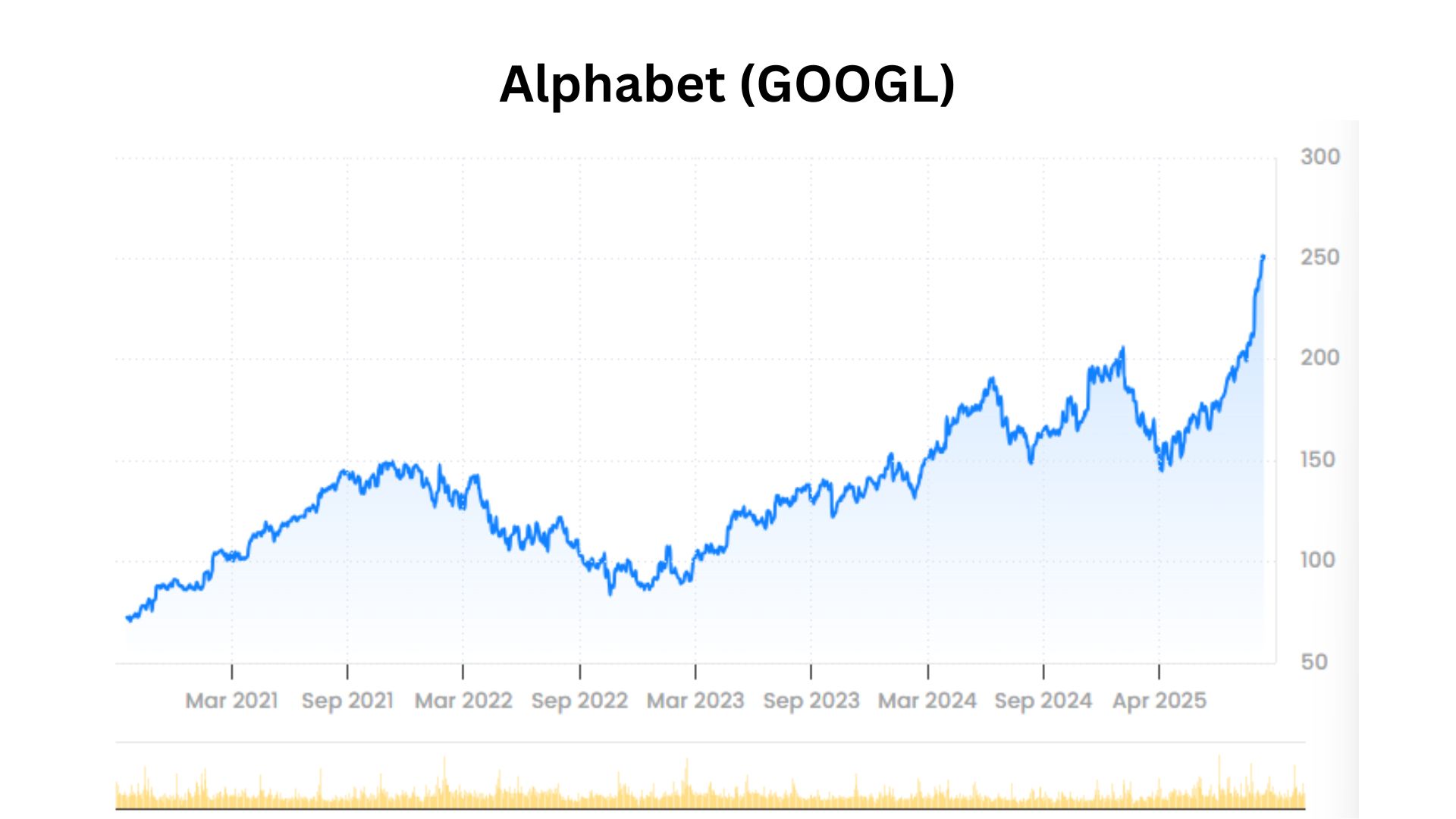
1) Alphabet Inc. (NASDAQ: GOOG / GOOGL)
Why It Matters
Alphabet remains a core technology leader with extensive AI integration across its services, platforms, and emerging businesses. It is not merely a search engine company; it is a diversified technology conglomerate with AI-enabled ad platforms, cloud offerings, autonomous systems, and proprietary silicon development.
Investment Rationale
- AI-Driven Core Products: Google Search and YouTube increasingly embed AI to improve relevancy, recommendation engines, ad targeting, and user engagement—directly influencing monetization and margins. (The Motley Fool)
- Waymo Autonomous Transportation: Alphabet’s Waymo is among the most advanced autonomous driving initiatives globally, backed by machine learning, high-precision mapping, and sensor fusion technology.
- Cloud Growth: Google Cloud’s AI-optimized infrastructure and tools support enterprise AI workloads, competing with AWS and Azure.

Valuation and Metrics
| Metric | Value (Dec 2025) |
|---|---|
| Market Capitalization | ~$3.7 trillion (The Motley Fool) |
| Forward P/E | ~28x (The Motley Fool) |
| Dividend Yield | ~0.27% (The Motley Fool) |
Despite its scale, Alphabet’s cash flow generation and AI-enhanced revenue streams argue for further expansion of valuation multiples relative to peers.
Strategic Considerations
- Alphabet’s internal silicon initiative aims to reduce dependency on external chipmakers while tuning hardware specifically for AI models.
- Regulatory scrutiny and competitive pressures (e.g., Microsoft, Amazon) create execution risks that investors should evaluate alongside growth opportunities.
2) Amazon.com Inc. (NASDAQ: AMZN)
Why It Matters
Amazon’s platform combines e-commerce, logistics, cloud computing, and emerging autonomous systems—each increasingly powered by machine learning. AWS (Amazon Web Services) remains a key AI infrastructure provider, supporting large-scale training and inference workloads.
Investment Rationale
- AWS Leadership: AWS continues to expand its high-performance computing offerings for generative AI, data services, and enterprise cloud transformation.
- AI in Operations: Machine learning models power inventory forecasting, supply-chain optimization, customer personalization, and autonomous robotics in fulfillment centers.
- Zoox Autonomous Mobility: Amazon-owned Zoox reflects a long-term venture into driverless mobility, potentially unlocking recurring revenue through autonomous ride-hailing or logistics services. (The Motley Fool)
Valuation and Metrics
| Metric | Value (Dec 2025) |
|---|---|
| Market Capitalization | ~$2.4 trillion (The Motley Fool) |
| Forward P/E | ~27x (The Motley Fool) |
| Cloud Revenue Growth | Sector-leading |
Strategic Considerations
- Amazon’s integration of AI in consumer and enterprise operations provides both top-line growth avenues and margin expansion potential.
- Investor sentiment occasionally undervalues AWS relative to peers such as Microsoft Azure and Google Cloud, presenting a potential valuation opportunity.
3) Taiwan Semiconductor Manufacturing Company (NYSE: TSM)
Why It Matters
TSMC is the dominant foundry partner for the world’s most advanced chip designers. Its fabrication capacity underpins the AI ecosystem—from data-center GPUs to edge AI SoCs—making its strategic footprint critical to semiconductor supply chains.
Investment Rationale
- TSMC’s pure-play fab model differentiates it from integrated device manufacturers, reducing competitive friction and attracting business from firms that cannot internally produce cutting-edge silicon.
- The company’s operational efficiency, scale, and technical leadership in advanced nodes (e.g., 5nm, 3nm) support sustained revenue growth driven by AI compute demand. (The Motley Fool)

Valuation and Metrics
| Metric | Value (Dec 2025) |
|---|---|
| Market Capitalization | ~$1.5 trillion (The Motley Fool) |
| Forward P/E | ~24x (The Motley Fool) |
| Operating Margin | ~50% (The Motley Fool) |
Strategic Considerations
- TSMC’s ability to consistently invest in next-generation capacity and lithography (including EUV tools) creates high barriers to entry for competitors.
- Geopolitical risks, especially cross-strait tensions, are important to monitor given TSMC’s Taiwan base.
Broader AI Market Trends Supporting These Picks
To justify exposure to large-cap AI stocks, consider the broader structural trends:
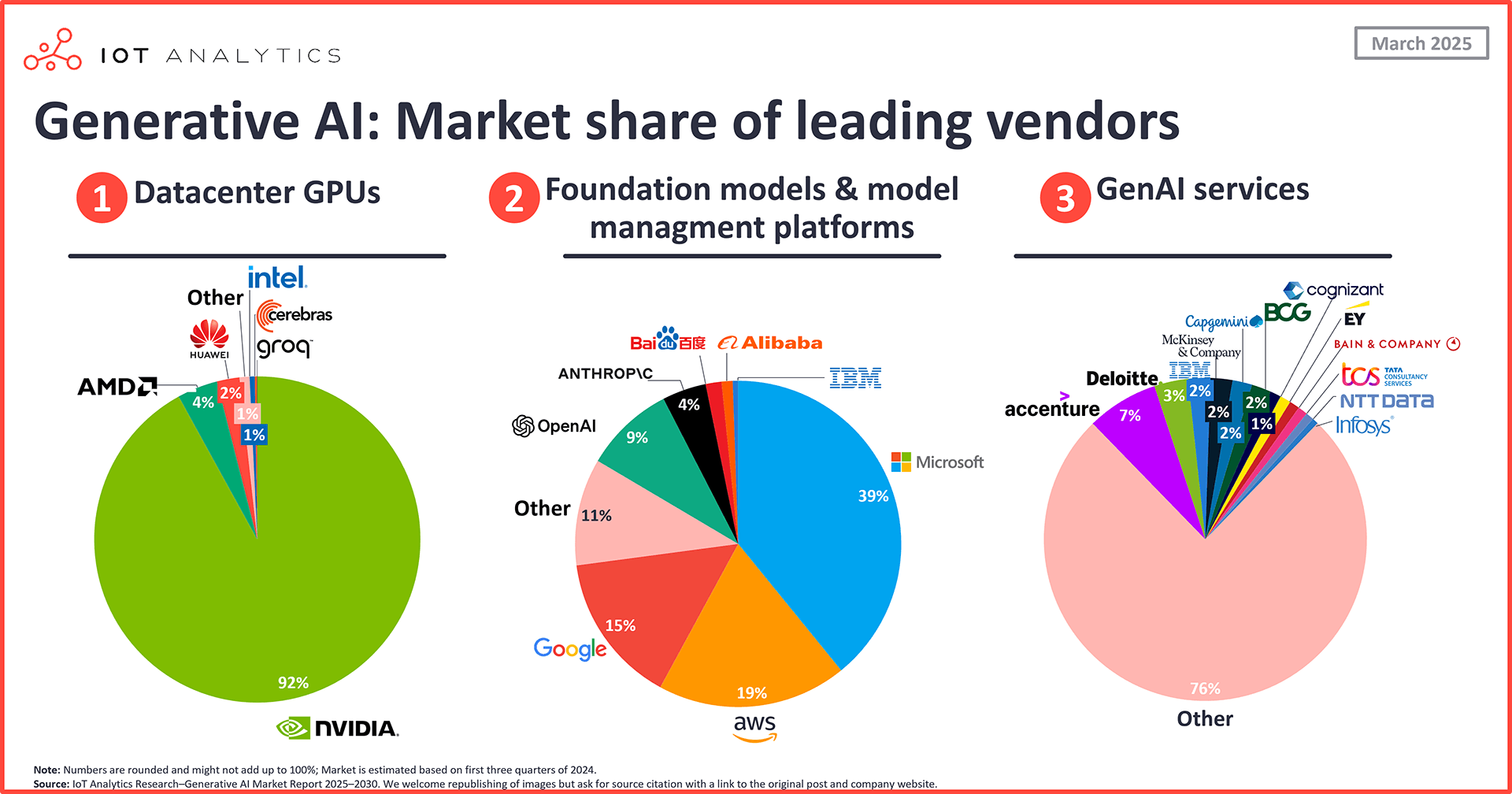
1. Exponential Growth in AI Compute Demand
The demand for AI silicon continues to surge as enterprise and hyperscale customers expand data center capacity to support large model training and inference workloads. Recent analyst commentary suggests that semiconductor stocks leveraged to AI infrastructure could outperform broad markets in 2026. (Barron’s)
2. Diversification of AI Revenue Streams
Unlike earlier tech cycles where growth concentrated in one segment, AI spreads across:
- Cloud platforms: Continuous revenue growth from managed AI services.
- Infrastructure: Chips, GPUs, and specialized ASICs.
- Autonomous systems: Robotics and vehicle autonomy.
- AI-enabled enterprise applications: Security, analytics, automation.

Analysts also highlight that cybersecurity stocks may benefit from AI-driven demand for digital resilience. (Business Insider)
3. Strategic Positioning of AI Leaders

Well-capitalized giants like Alphabet and Amazon are uniquely positioned to absorb R&D costs and compete globally. Even semiconductor peers such as Nvidia show valuation anomalies that may present relative opportunities. (MarketWatch)
Risks and Investment Considerations
Before allocating capital, investors should evaluate:
- Valuation multiples: High growth expectations are often priced into large caps.
- Regulatory climates: Antitrust and data privacy oversight may impact technology giants differently.
- Geopolitical factors: Especially for hardware supply chains centered in East Asia.
- Execution risk: Emerging segments (e.g., autonomous vehicles) will likely take multiple years to contribute meaningfully to earnings.
Summary: Key Metrics at a Glance
| Company | Market Cap | Primary AI Exposure | Core Strength |
|---|---|---|---|
| Alphabet | ~$3.7T | AI-enabled search, cloud, autonomy | Diversified AI revenue |
| Amazon | ~$2.4T | AWS AI infrastructure, automation | Cloud leadership & operations |
| TSMC | ~$1.5T | Semiconductor foundry for AI chips | Manufacturing dominance |
Conclusion
Investing in AI stocks for 2026 is not purely a bet on technology; it is a bet on business models that integrate AI into core revenue streams and maintain competitive advantages. Alphabet, Amazon, and TSMC exemplify such profiles due to diversified exposure, infrastructure roles, and strategic investments in AI capabilities.
If you would like, I can also generate custom downloadable graphics including:
- Excel charts of historical stock performance
- Comparative valuation heat maps
- Future revenue projection dashboards
Just specify the format(s) you prefer and the specific metrics you want visualized (e.g., P/E, revenue growth, segment contribution).
This analysis is informational and does not constitute financial advice. Always conduct your own due diligence or consult a licensed financial advisor before making investment decisions.